Recovery Guidelines After Cartilage Surgery
Setting Expectations for Cartilage Surgery Recovery
Recovery from cartilage restoration surgery is a highly structured and progressive process that plays a critical role in the long-term success of the procedure. Unlike routine orthopedic procedures, cartilage surgeries often require strict post-operative protocols, carefully managed weight-bearing, and consistent physical therapy.
At Kerlan Jobe Institute, we tailor recovery programs to the specific procedure performed and to each patient’s unique anatomy, lifestyle, and goals—whether returning to sports or regaining pain-free mobility.
General Phases of Cartilage Surgery Recovery
While each surgery (e.g., microfracture, ACI, OAT, OCA) has its own nuances, recovery is typically divided into four key phases:
Phase 1: Protection & Early Motion (Weeks 0–6)
Goals:
Protect the healing cartilage site
Control pain and swelling
Initiate gentle range-of-motion exercises
Typical Guidelines:
Weight-bearing:
Non-weight-bearing with crutches (often 4–6 weeks)
Some procedures allow partial weight-bearing earlier
Bracing: May be required to limit knee flexion or rotation
Range of Motion:
Continuous Passive Motion (CPM) machines often prescribed
Passive stretching and mobility guided by a physical therapist
Medications:
Pain control and anti-inflammatory support
Blood clot prevention (aspirin or anticoagulants)
Phase 2: Controlled Loading & Strengthening (Weeks 6–12)
Goals:
Gradually increase weight-bearing
Begin closed-chain strengthening exercises
Regain normal walking pattern
Typical Guidelines:
Weight-bearing: Progress from partial to full as tolerated
Physical therapy:
Focus on quads, glutes, hamstrings
Balance and core control
Cardio:
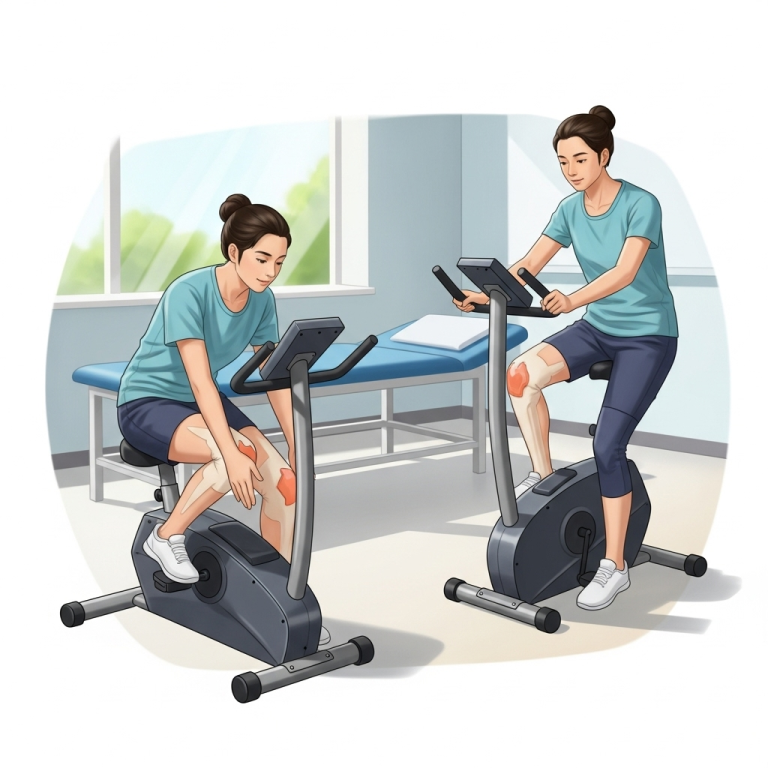
Low-impact options (e.g., stationary bike, pool therapy)
Phase 3: Functional Training & Conditioning (Months 3–6)
Goals:
Normalize strength and endurance
Re-establish joint mechanics and functional movement
Improve neuromuscular control
Typical Guidelines:
Agility drills (if returning to sports)
Proprioception and stability exercises
Sport-specific movements under supervision
MRI or clinical check to assess healing progress
Phase 4: Return to Sport or High-Demand Activity (Months 6–12+)
Goals:
Full return to high-impact activity, only if cartilage is stable and functional
Continue to protect the joint with proper mechanics and strength
Typical Timeline by Procedure:
Microfracture: Return to light activity in 4–6 months; full sports in 6–9 months
OAT/OCA: 6–9 months for most sports; 12 months for high-impact return
ACI: Often 9–12 months or more, depending on lesion size and location
Clearance is based on functional tests, imaging, and your surgeon’s judgment—not just time.
What Impacts Recovery Time?
Several factors can influence how quickly (and successfully) a patient recovers:
Size and location of the cartilage defect
Type of surgery performed
Patient age and overall joint health
Joint alignment, stability, and meniscal integrity
Adherence to rehab protocols
Smoking, weight, and general health status
Long-Term Joint Protection Tips
Even after full recovery, protecting the restored cartilage is important:
Maintain a healthy weight to reduce joint stress
Avoid high-impact sports unless cleared by your surgeon
Keep surrounding muscles strong with regular exercise
Wear proper footwear and avoid uneven terrain
Return for periodic orthopedic checkups
Support Every Step of the Way
At Kerlan Jobe Institute, our commitment to your outcome doesn’t stop after surgery. Our team provides:
Direct collaboration with physical therapists
Customized rehabilitation plans
Return-to-play evaluations
Ongoing education for patients and their families
We believe that a successful recovery is a team effort—and we’re with you from the operating room to your return to full activity.