Posterior Tibial Tendon Dysfunction (PTTD)
What Is Posterior Tibial Tendon Dysfunction (PTTD)?
Adult-Acquired Flatfoot from Progressive Tendon Failure. PTTD is a condition where the posterior tibial tendon, which supports the arch of the foot and stabilizes the ankle, becomes inflamed or torn. This leads to progressive flattening of the foot’s arch — a condition often referred to as adult-acquired flatfoot. Over time, the tendon may lose its ability to support the arch, resulting in pain, deformity, and difficulty with walking.
This condition is most common in women over age 40 and in individuals who are overweight or have conditions that weaken the tendons.
Book A Consultation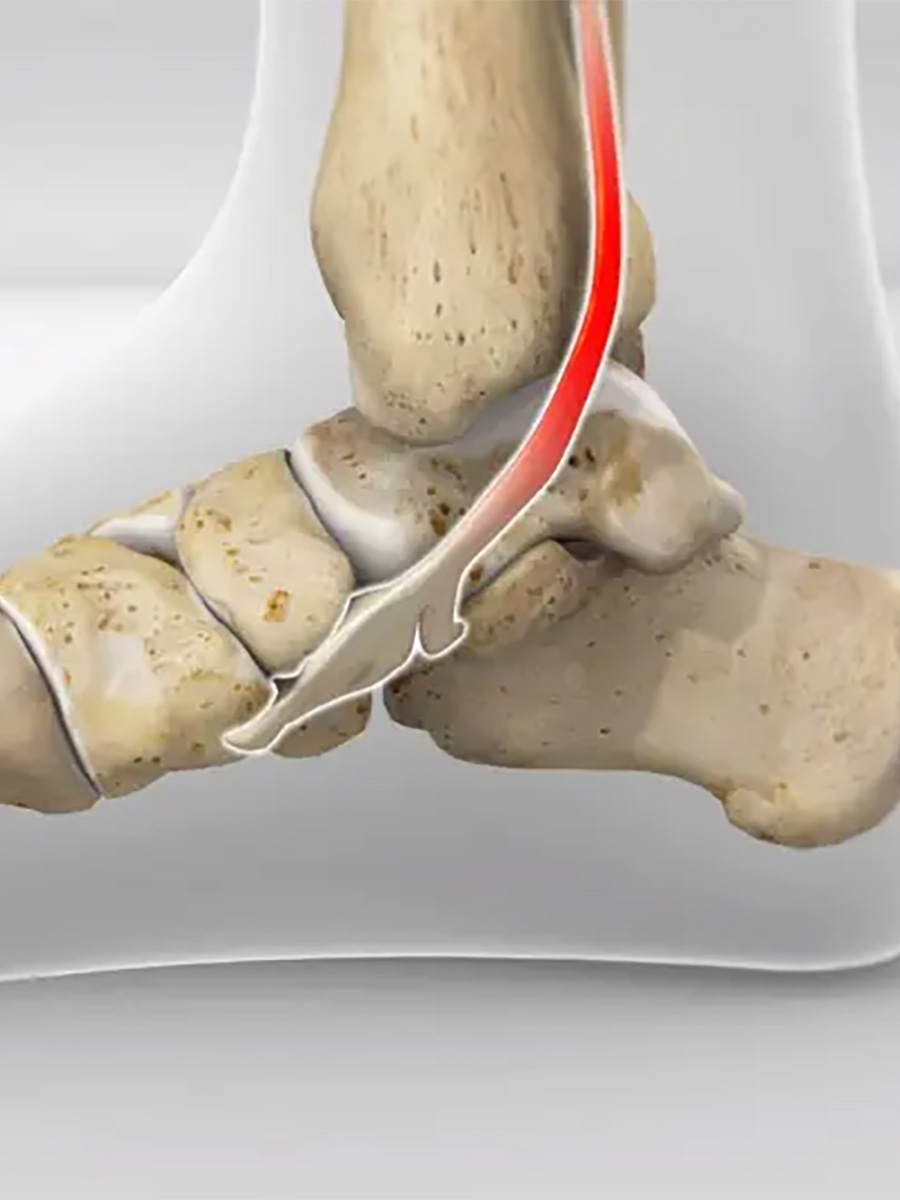

Causes and Risk Factors
- Overuse or repetitive strain (especially in runners or people on their feet for long hours)
- Traumatic ankle injuries
- Obesity, diabetes, or hypertension
- Previous surgery or corticosteroid use
- Rheumatoid arthritis or other inflammatory conditions
- High-impact sports or activities involving stairs or inclines
Symptoms
- Pain and swelling along the inside of the ankle
- Gradual flattening of the foot’s arch
- Difficulty standing on tiptoe on the affected side
- Weakness or fatigue during prolonged walking
- Rolling inward of the ankle (overpronation)
- Worsening shoe wear pattern or difficulty fitting shoes
Diagnosis
- Physical examination to assess arch height, heel alignment, and tendon function
- Single-leg heel rise test — inability to perform may indicate tendon dysfunction
- X-rays to evaluate foot alignment and progression of flatfoot
- MRI or ultrasound to assess tendon integrity and surrounding tissue
Treatment
Non-Surgical Treatment
- Rest and reduction of weight-bearing activities
- Orthotic devices to support the arch and realign the foot
- Custom ankle-foot orthoses (AFO) in moderate cases
- Physical therapy focused on tendon strengthening and joint mobility
- Anti-inflammatory medications and weight management
Surgical Treatment
- Recommended when non-surgical measures fail or in advanced cases
- May include tendon transfer, osteotomy (realignment of bones), or joint fusion
- Goal is to restore foot alignment, support the arch, and eliminate pain
Recovery Timeline
Conservative management can take 2–3 months to show improvement
Post-surgical recovery may require 3–6 months, with bracing and physical therapy
Full return to activity depends on the procedure and individual healing, often by 6–9 months
Expert Treatment at Kerlan Jobe Institute
The orthopedic foot and ankle team at Kerlan Jobe Institute provides comprehensive care for patients with PTTD. Our specialists use diagnostic precision and patient-specific treatment plans — from bracing and rehabilitation to advanced surgical reconstruction — to restore foot function and relieve pain.
Getting You Back in Motion
Surgery is just the beginning. How do you heal, move, and feel when all is said and done?
From NHL and NBA players to weekend warriors, our goal is the same: getting you back to doing what you love.

Patient Testimonials
highly skilled surgeon
“Dr. Kvitne operated on my shoulder 3 years ago and I had a perfect recovery and no problems since and I do not see a scar. He is kind with a great bedside manor and a highly skilled surgeon.”
Dr. Kharrazi truly got me back on my feet—literally.
One year ago, I tore several ligaments in my knee, and now I’m able to do the things I enjoy again.
His expertise, knowledge, and confidence are what made me choose him as my surgeon, and I will always be grateful to him and his entire team. Rudy, his assistant; Norma, who was always so prompt with all of my emails; and Blanca, who helped with forms—each of them made a difference. I can’t thank them enough for being there with me every step of the way.
I can’t say enough good things about Dr. Kvitne
“My experience with Dr Kvitne was amazing he is a outstanding Doctor what a talented man he is my knee was in such bad shape he did not have much to work with but he got in there and fixed me up there was so much that had to be repaired Dr Kvitne with his knowledge and experience repaired my knee so nicely done I have had knee surgery before but never like this I can’t say enough good things about Dr Kvitne awesome human being as well as a awesome excellent Doctor!!”
Dr. Kharrazi gave me my mobility back
After 2 knee surgeries with other Orthopedics I must say that Dr. Kharrazi is a miracle worker. I have my mobility back and my pain level is so greatly improved. Thanks Dr. K!
Schedule a Consultation
Kerlan-Jobe provides comprehensive orthopaedic care for patients seeking expert treatment for sports injuries, joint pain, and mobility limitations. We offers specialized experience and a patient-first approach designed to support lasting results.
Contact the office to schedule a consultation and learn more about your treatment options.