
Tarsal Tunnel Syndrome
What Is Tarsal Tunnel Syndrome?
Nerve Compression Causing Pain and Numbness in the Foot and Ankle. Tarsal Tunnel Syndrome (TTS) is a condition caused by compression of the posterior tibial nerve as it travels through the tarsal tunnel — a narrow space located on the inside of the ankle. Similar to carpal tunnel syndrome in the wrist, TTS can lead to pain, burning, tingling, or numbness in the foot and ankle. The condition may develop gradually or occur suddenly after an injury.
Book A Consultation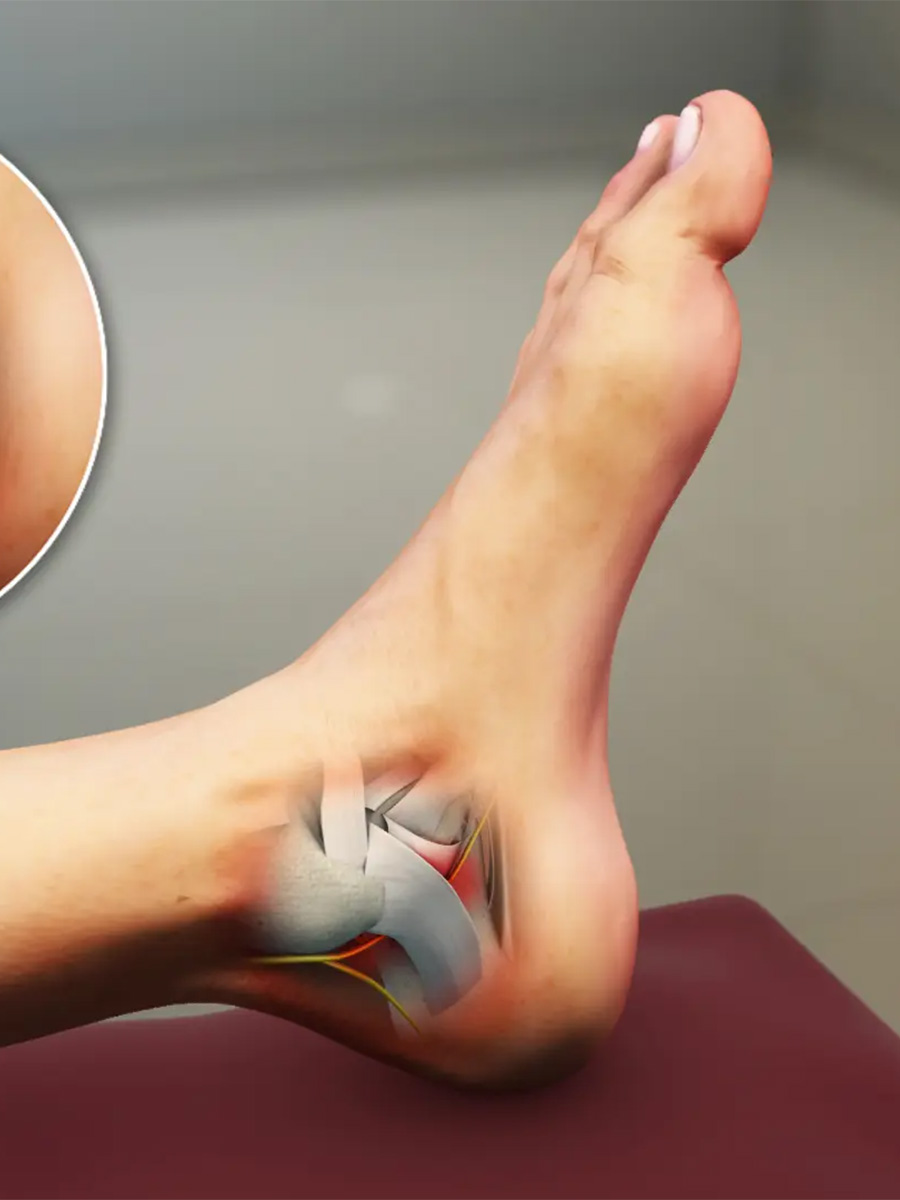

Causes and Risk Factors
- Flatfoot deformity (causes stretching of the nerve)
- Trauma to the ankle (sprains, fractures, or swelling)
- Varicose veins, ganglion cysts, or lipomas in the tarsal tunnel
- Arthritis or inflammation of nearby tendons
- Diabetes or other systemic nerve conditions
- Scar tissue or repetitive stress injuries
Symptoms
- Burning, tingling, or numbness along the sole of the foot
- Pain radiating from the inside of the ankle into the foot
- Increased symptoms with prolonged standing or walking
- Nighttime pain or symptoms worsened by activity
- Weakness or loss of coordination in severe cases
Diagnosis
- Clinical exam with tapping over the nerve (Tinel’s sign) to reproduce symptoms
- Nerve conduction studies (EMG/NCV) to measure nerve function
- MRI or ultrasound to evaluate for space-occupying lesions or inflammation
- Gait and posture evaluation for underlying biomechanical contributors
Treatment
Non-Surgical Treatment
- Rest and activity modification to reduce nerve irritation
- Anti-inflammatory medications
- Shoe inserts or custom orthotics to support foot structure
- Bracing or ankle supports
- Physical therapy to improve foot alignment and reduce pressure on the nerve
- Corticosteroid injections in select cases
Surgical Treatment
- Considered for patients who do not improve with conservative care
- Involves decompression of the tarsal tunnel to relieve pressure on the nerve
- May include removal of masses, release of tight structures, or correction of flatfoot
Recovery Timeline
Mild cases treated conservatively often improve in 6–8 weeks
Post-surgical recovery typically involves 2–4 weeks of restricted activity
Full return to daily activities or sports expected within 8–12 weeks, depending on severity and nerve healing
Expert Treatment at Kerlan Jobe Institute
At Kerlan Jobe Institute, our specialists use advanced imaging and clinical evaluations to diagnose Tarsal Tunnel Syndrome accurately. We offer both non-invasive and surgical solutions tailored to each patient’s anatomy and lifestyle — with the goal of restoring comfort and function.
Getting You Back in Motion
Surgery is just the beginning. How do you heal, move, and feel when all is said and done?
From NHL and NBA players to weekend warriors, our goal is the same: getting you back to doing what you love.

Patient Testimonials
highly skilled surgeon
“Dr. Kvitne operated on my shoulder 3 years ago and I had a perfect recovery and no problems since and I do not see a scar. He is kind with a great bedside manor and a highly skilled surgeon.”
Dr. Kharrazi truly got me back on my feet—literally.
One year ago, I tore several ligaments in my knee, and now I’m able to do the things I enjoy again.
His expertise, knowledge, and confidence are what made me choose him as my surgeon, and I will always be grateful to him and his entire team. Rudy, his assistant; Norma, who was always so prompt with all of my emails; and Blanca, who helped with forms—each of them made a difference. I can’t thank them enough for being there with me every step of the way.
I can’t say enough good things about Dr. Kvitne
“My experience with Dr Kvitne was amazing he is a outstanding Doctor what a talented man he is my knee was in such bad shape he did not have much to work with but he got in there and fixed me up there was so much that had to be repaired Dr Kvitne with his knowledge and experience repaired my knee so nicely done I have had knee surgery before but never like this I can’t say enough good things about Dr Kvitne awesome human being as well as a awesome excellent Doctor!!”
Dr. Kharrazi gave me my mobility back
After 2 knee surgeries with other Orthopedics I must say that Dr. Kharrazi is a miracle worker. I have my mobility back and my pain level is so greatly improved. Thanks Dr. K!
Schedule a Consultation
Kerlan-Jobe provides comprehensive orthopaedic care for patients seeking expert treatment for sports injuries, joint pain, and mobility limitations. We offers specialized experience and a patient-first approach designed to support lasting results.
Contact the office to schedule a consultation and learn more about your treatment options.