
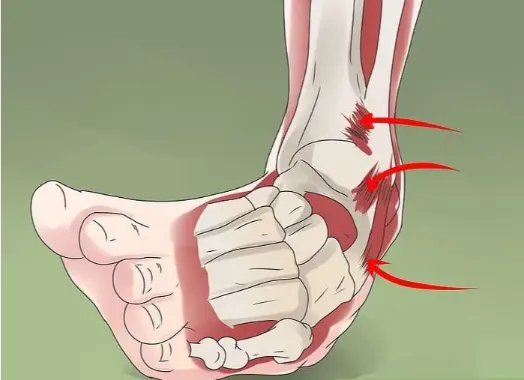
Ligament Damage from Twisting or Rolling the Ankle
What Is an Ankle Sprain?
An ankle sprain occurs when one or more ligaments in the ankle are stretched or torn due to an unnatural twisting or rolling motion. Most sprains involve the lateral (outer) ligaments and happen when the foot rolls inward. This is one of the most common orthopedic injuries, especially in athletes and active individuals.
Causes and Risk Factors
- Walking or running on uneven surfaces
- Landing awkwardly from a jump
- Sudden twisting or rolling of the ankle during sports
- Wearing unstable footwear (e.g., high heels, worn-out sneakers)
- Previous ankle sprains, which can weaken ligament integrity
Symptoms
- Pain on the outside or inside of the ankle
- Swelling and bruising around the ankle joint
- Tenderness when touching the injured area
- Difficulty bearing weight or walking
- Instability or a feeling of the ankle “giving out”
Diagnosis
- Clinical exam to assess swelling, tenderness, and range of motion
- Special stress tests to evaluate ligament stability
- Imaging:
- X-rays to rule out fractures
- MRI or ultrasound in cases of severe sprains or when chronic instability is suspected
Treatment
Non-Surgical Treatment
- Most ankle sprains can be treated without surgery
- RICE Protocol:
- Rest the injured ankle
- Ice the area for 15–20 minutes several times a day
- Compression with a bandage or brace
- Elevation above heart level to reduce swelling
- NSAIDs for pain relief
- Physical therapy to restore strength, flexibility, and proprioception
Surgical Treatment
- Rarely needed, but may be considered if:
- Ligament is completely torn and healing is poor
- Chronic ankle instability develops
- Injury involves multiple ligaments or is associated with a fracture
- Procedures include ligament repair or reconstruction using suture anchors or grafts
Recovery Timeline
- Mild sprains (Grade 1): Recovery within 1–2 weeks with conservative care
- Moderate sprains (Grade 2): 3–6 weeks of structured rehab
- Severe sprains (Grade 3): 8–12 weeks or longer depending on ligament healing
- Early rehabilitation is key to avoiding long-term instability or recurrent sprains
Expert Treatment at Kerlan Jobe Institute
At Kerlan Jobe Institute, our orthopedic specialists provide expert diagnosis and individualized care plans for ankle sprains. Whether your injury is mild or complex, we help you regain full ankle function and reduce the risk of re-injury through state-of-the-art treatment and rehabilitation.