Recurrent Elbow Instability
What Is Recurrent Elbow Instability?
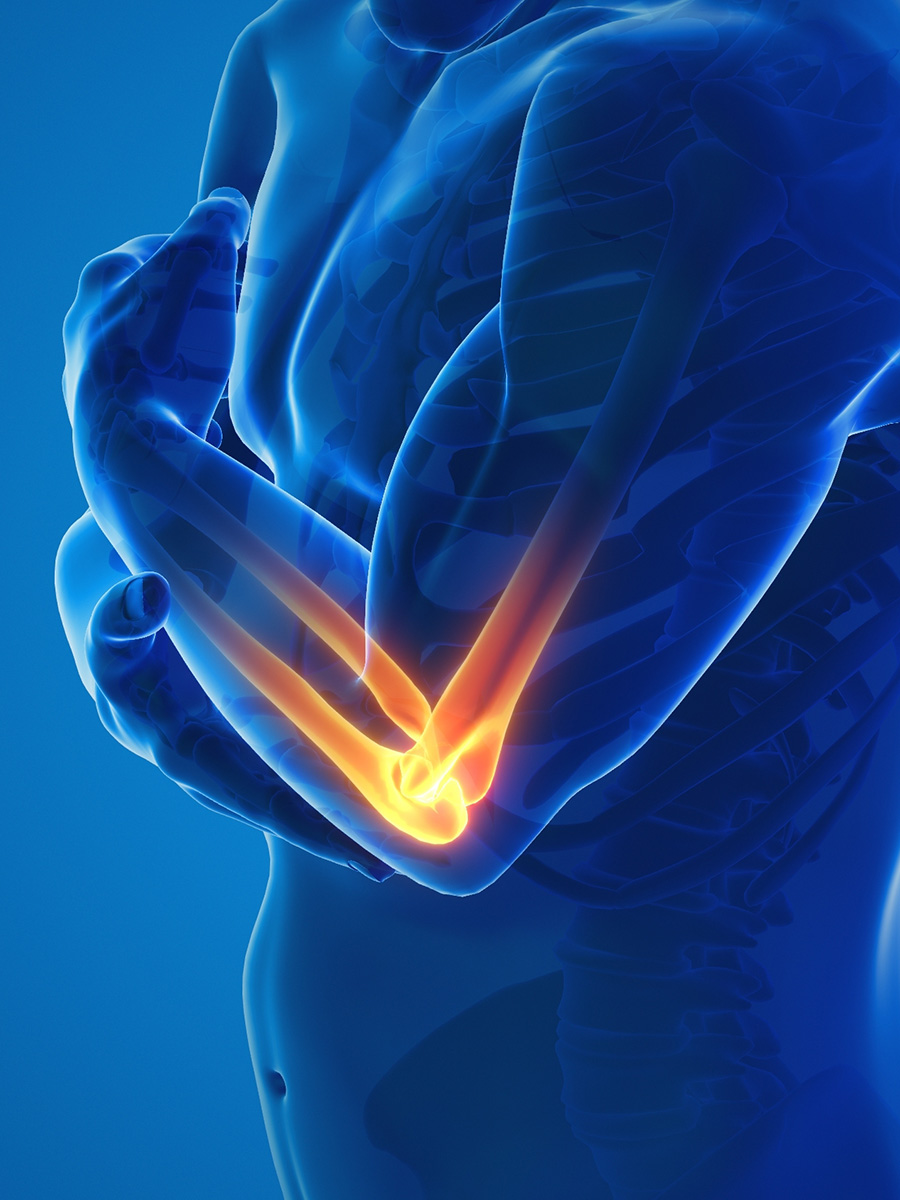
Recurrent elbow instability occurs when the elbow joint repeatedly feels loose, gives way, or partially dislocates (subluxes). This condition typically results from one or more ligament injuries that have not healed properly, leading to compromised joint stability. While a single dislocation may heal without surgery, repeated dislocations or subluxations often cause ongoing mechanical problems, especially during pushing, weight-bearing, or throwing movements.
Instability can affect different parts of the elbow and may be classified as:
- Posterolateral rotatory instability (PLRI) – the most common form
- Valgus instability – often related to UCL injury
- Varus posteromedial rotatory instability

Causes and Risk Factors
- Previous elbow dislocation or fracture
- Ligament injuries (particularly lateral collateral ligament complex)
- Repetitive overuse from throwing sports
- Congenital ligament laxity (generalized hypermobility)
- Post-surgical complications
- Poor healing from prior trauma
Symptoms
- A sensation that the elbow may “give out” during pushing or rotating
- Clicking, locking, or catching with movement
- Pain during weight-bearing through the arm, especially with the elbow in extension
- Recurrent subluxation or dislocation episodes
- Weakness or reduced athletic performance
- Difficulty performing activities such as push-ups or getting up from a chair using the arms
Diagnosis
- Detailed clinical exam including stability tests (pivot shift test, varus/valgus stress tests)
- X-rays to rule out fractures or bone alignment issues
- MRI or MR arthrogram to evaluate ligament damage and joint capsule laxity
- CT scan may be used to detect subtle bone deformities or malalignment
Treatment
Non-Surgical Treatment
May be attempted in mild cases or in patients with minimal functional limitations:
- Activity modification to avoid aggravating movements
- Strengthening exercises focused on dynamic stabilizers (e.g., forearm and shoulder muscles)
- Bracing for sport or activity-specific protection
- Physical therapy to improve neuromuscular control
Surgical Treatment
- Recommended when symptoms persist or interfere with daily or athletic activities
- Ligament reconstruction (commonly LCL repair or UCL repair depending on the instability pattern)
- May involve graft tissue to restore normal tension and function
- Correction of any associated bone deformities or joint malalignment
- Post-surgical bracing and gradual rehabilitation are critical to a full recovery
Recovery Outlook
Postoperative recovery typically involves 6 to 8 weeks of immobilization followed by progressive motion
Full return to sports or high-demand use usually occurs between 4 to 6 months
Early surgical repair has a high success rate, especially when combined with structured rehab
Why Kerlan Jobe Institute?
The elbow specialists at Kerlan Jobe Institute are experts in diagnosing and treating complex elbow instability. Using advanced imaging and reconstructive techniques, we aim to restore normal elbow function, prevent recurrence, and help patients safely return to sport or physical activity.
Getting You Back in Motion
Surgery is just the beginning. How do you heal, move, and feel when all is said and done?
From NHL and NBA players to weekend warriors, our goal is the same: getting you back to doing what you love.
Patient Testimonials
highly skilled surgeon
“Dr. Kvitne operated on my shoulder 3 years ago and I had a perfect recovery and no problems since and I do not see a scar. He is kind with a great bedside manor and a highly skilled surgeon.”
Dr. Kharrazi truly got me back on my feet—literally.
One year ago, I tore several ligaments in my knee, and now I’m able to do the things I enjoy again.
His expertise, knowledge, and confidence are what made me choose him as my surgeon, and I will always be grateful to him and his entire team. Rudy, his assistant; Norma, who was always so prompt with all of my emails; and Blanca, who helped with forms—each of them made a difference. I can’t thank them enough for being there with me every step of the way.
I can’t say enough good things about Dr. Kvitne
“My experience with Dr Kvitne was amazing he is a outstanding Doctor what a talented man he is my knee was in such bad shape he did not have much to work with but he got in there and fixed me up there was so much that had to be repaired Dr Kvitne with his knowledge and experience repaired my knee so nicely done I have had knee surgery before but never like this I can’t say enough good things about Dr Kvitne awesome human being as well as a awesome excellent Doctor!!”
Dr. Kharrazi gave me my mobility back
After 2 knee surgeries with other Orthopedics I must say that Dr. Kharrazi is a miracle worker. I have my mobility back and my pain level is so greatly improved. Thanks Dr. K!
Schedule a Consultation
Kerlan-Jobe provides comprehensive orthopaedic care for patients seeking expert treatment for sports injuries, joint pain, and mobility limitations. We offers specialized experience and a patient-first approach designed to support lasting results.
Contact the office to schedule a consultation and learn more about your treatment options.