
Olecranon Fracture
What Is an Olecranon Fracture?
An olecranon fracture is a break in the bony tip of the elbow, part of the ulna—one of the two forearm bones. The olecranon forms the pointed end of the elbow and serves as the attachment site for the triceps tendon, allowing extension of the elbow.
This injury can vary from a simple, nondisplaced crack to a complex break with displacement, joint involvement, or multiple fragments. Because the olecranon is exposed and lacks protective soft tissue, it is particularly vulnerable to trauma.
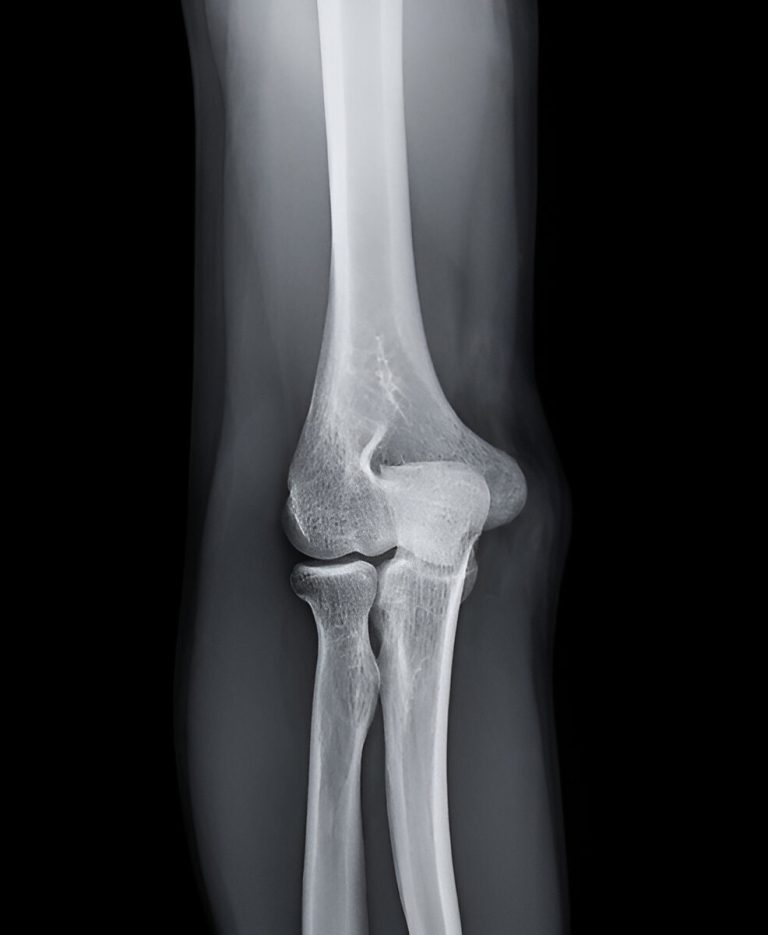
What Is an Olecranon Fracture?
An olecranon fracture is a break in the bony tip of the elbow, part of the ulna—one of the two forearm bones. The olecranon forms the pointed end of the elbow and serves as the attachment site for the triceps tendon, allowing extension of the elbow.
This injury can vary from a simple, nondisplaced crack to a complex break with displacement, joint involvement, or multiple fragments. Because the olecranon is exposed and lacks protective soft tissue, it is particularly vulnerable to trauma.
Causes and Risk Factors
Direct impact to the elbow, such as a fall onto a bent arm
Indirect trauma, such as a fall onto an outstretched hand that transmits force to the elbow
Motor vehicle collisions
Sports-related falls or impacts, especially in cycling, skiing, or skateboarding
Osteoporosis or weakened bones, especially in older adults
Symptoms
Sudden, sharp pain at the back of the elbow
Visible deformity or swelling around the tip of the elbow
Inability to fully extend the elbow
Tenderness over the olecranon
Bruising or open wound in the case of a compound fracture
Weakness when pushing or straightening the arm
Diagnosis
Clinical examination, noting pain, swelling, and elbow extension weakness
X-rays to assess the location, number of fragments, and displacement of the fracture
In complex cases, a CT scan may be ordered to evaluate joint involvement
Evaluation for associated injuries, such as radial head fractures or ligament damage
Treatment
Non-Surgical Treatment
Appropriate for non-displaced fractures
Involves:
Immobilization in a posterior splint or brace for 4–6 weeks
Activity modification and pain control with NSAIDs
Gradual introduction of physical therapy to restore motion and strength
Surgical Treatment
Recommended for displaced, open, or unstable fractures
Common surgical options include:
Tension band wiring: For simple fractures
Plate and screw fixation: For comminuted or unstable fractures
Excision and triceps reattachment: Occasionally used in elderly patients with poor bone quality
Surgery aims to restore elbow alignment, function, and range of motion
Recovery Outlook
Healing typically occurs within 6 to 12 weeks
Physical therapy begins after initial immobilization and may continue for several months
Full recovery—including return to sports or heavy labor—may take 3 to 6 months
Most patients regain good elbow function, though mild stiffness can persist in some cases
Why Kerlan Jobe Institute?
At Kerlan Jobe Institute, our orthopedic trauma specialists offer precise diagnosis and expert management of olecranon fractures, ensuring a tailored recovery plan that restores elbow strength and mobility.