Elbow Dislocation
What Is an Elbow Dislocation?
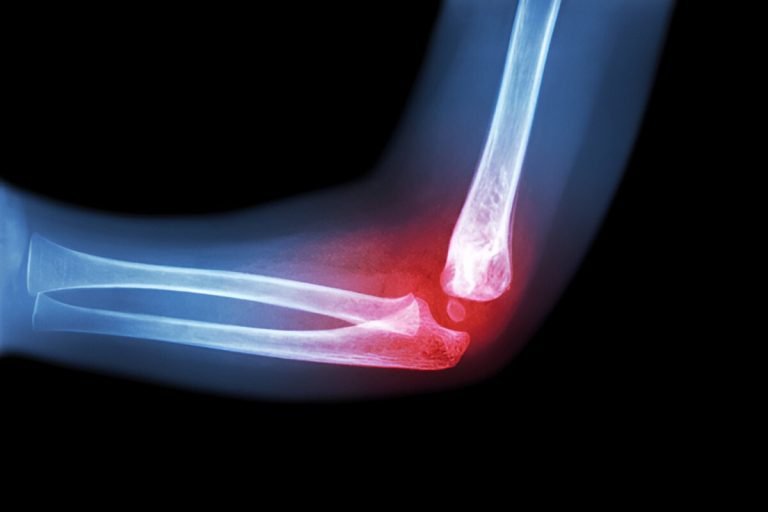
An elbow dislocation occurs when the ulna and radius (forearm bones) are forcibly displaced from their normal articulation with the humerus (upper arm bone). It is a serious orthopedic emergency that often damages multiple supporting structures — particularly the ligaments, joint capsule, and occasionally nerves or blood vessels.
Dislocations can range from simple (no associated fractures) to complex (accompanied by fractures, soft tissue injury, or neurovascular compromise).
What Causes Elbow Dislocation?
Elbow dislocations usually result from:
Falling on an outstretched hand with the elbow extended
High-energy trauma (e.g., motor vehicle accidents, sports collisions)
Severe twisting injuries of the arm
Hyperextension during a forceful impact
Types of Elbow Dislocations
Posterior dislocation (most common): Forearm shifts backward relative to the upper arm
Anterior dislocation: Rare, occurs when the forearm is pushed forward
Lateral/medial dislocations: Sideways displacement
Complex dislocation: Involves associated fractures (e.g., radial head, coronoid process, olecranon)
Symptoms
Severe pain and deformity of the elbow
Inability to bend, straighten, or rotate the arm
Swelling and bruising
A sensation of the joint “popping out”
Possible numbness or tingling in the hand (indicating nerve involvement)
Loss of pulse or coolness in the forearm/hand (indicating vascular compromise)
Immediate Management
Elbow dislocations are a medical emergency. Key first steps:
Immobilize the arm in the position found
Do not attempt self-reduction
Seek emergency medical care for reduction under sedation or anesthesia
Early evaluation of blood flow and nerve function is critical
Diagnosis
After clinical evaluation:
X-rays to confirm dislocation type and rule out fractures
CT or MRI for complex cases or suspected soft-tissue damage
Vascular assessment (e.g., Doppler ultrasound, CT angiogram) if pulse is diminished
Treatment Options
Non-Surgical Treatment (Simple Dislocations)
Closed reduction (manipulating the joint back into place)
Short-term immobilization (1–2 weeks)
Gradual rehabilitation to restore range of motion
Physical therapy to prevent stiffness and regain function
Surgical Treatment (Complex or Unstable Dislocations)
Required if:
Associated fractures are present
Ligaments are torn and joint remains unstable
Neurovascular structures are injured
Procedures may involve:
Open reduction and internal fixation of fractures
Ligament repair or reconstruction
Joint stabilization techniques (e.g., hinged external fixator)
Recovery and Rehabilitation
Simple dislocation: Return to function within 8–12 weeks with guided rehab
Complex dislocation: Recovery may take 4–6 months, especially if surgery is needed
Goal is to restore full range of motion and prevent long-term complications such as:
Stiffness or contractures
Chronic instability
Post-traumatic arthritis
Advanced Elbow Trauma Care at Kerlan Jobe Institute
The team at Kerlan Jobe Institute specializes in treating all types of elbow dislocations — from simple joint realignment to complex, multi-ligament reconstruction. With advanced imaging, surgical expertise, and tailored rehabilitation, we guide patients from emergency care through full recovery.