
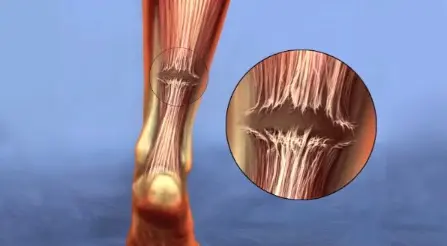
Sudden Loss of Power in the Ankle Due to Tendon Rupture
What Is an Achilles Tendon Tear?
The Achilles tendon is the largest and strongest tendon in the human body, connecting the calf muscles (gastrocnemius and soleus) to the heel bone (calcaneus). A tear or rupture of the Achilles tendon is a serious injury that often results in an immediate loss of strength and difficulty with walking or pushing off the foot. This injury typically occurs suddenly during sports or physical activity involving sudden acceleration or jumping.
Causes and Risk Factors
- Sudden pivoting, jumping, or sprinting
- Abrupt increase in physical activity
- Direct trauma or a misstep from a height
- Use of certain medications (e.g., fluoroquinolone antibiotics, corticosteroids)
- Middle-aged males participating in recreational sports
- Calf tightness or prior tendon degeneration
Symptoms
- Sudden, sharp pain in the back of the ankle or calf
- Sensation of being “kicked” or “struck” in the heel
- Audible “pop” or snapping sound at the time of injury
- Swelling and bruising near the heel
- Inability to push off the foot or rise on toes
- Visible gap in the tendon above the heel
Diagnosis
- Physical exam:
- Thompson test (squeezing the calf should cause foot movement—absent with rupture)
- MRI or ultrasound to confirm tear and assess severity
- X-rays may be used to rule out associated bone injury
Treatment
Non-Surgical Treatment
- Best suited for partial tears or low-demand patients
- Functional bracing in plantarflexion (toe-pointed position)
- Progressive rehab protocol over several months
- Risk of re-rupture may be slightly higher than with surgery
Surgical Treatment
- Often recommended for active individuals and complete ruptures
- Open or minimally invasive techniques to reattach tendon ends
- May use sutures, anchors, or grafts if tendon quality is poor
- Reduces risk of re-rupture and improves strength recovery in most cases
Recovery Timeline
- Initial healing and immobilization: 2–4 weeks
- Gradual weight-bearing and physical therapy: 6–12 weeks
- Full activity return (including sports): 6–9 months
- Early rehab protocols often lead to improved outcomes
Expert Treatment at Kerlan Jobe Institute
At Kerlan Jobe Institute, our orthopedic and sports medicine specialists offer state-of-the-art diagnosis, surgical repair, and personalized rehabilitation plans for Achilles tendon injuries. We prioritize early intervention and functional recovery, helping patients return to peak performance with confidence.