AC Joint Arthritis
What Is AC Joint Arthritis?
AC (Acromioclavicular) joint arthritis is a form of osteoarthritis that affects the small joint where the clavicle (collarbone) meets the acromion of the scapula (shoulder blade). This joint is responsible for allowing arm elevation and shoulder rotation. Over time, wear and tear can lead to the breakdown of cartilage, resulting in joint inflammation, pain, and limited shoulder motion.
Book A Consultation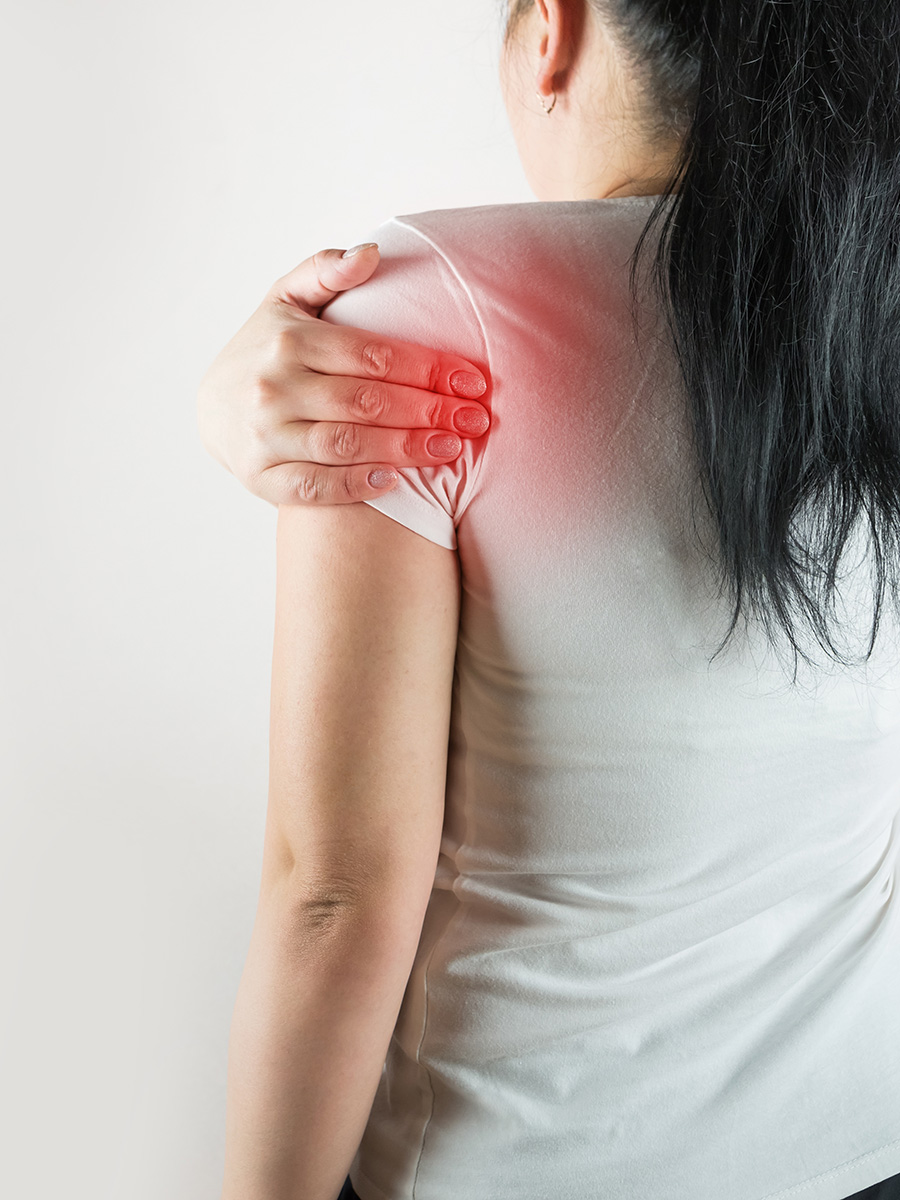

Causes and Risk Factors
- Natural aging process and degenerative changes
- Repetitive shoulder use or overhead lifting
- Prior trauma or AC joint separation
- Weightlifting and contact sports (e.g., football, rugby)
- Occupations requiring frequent lifting or pushing
- Previous surgery involving the shoulder or clavicle
Symptoms
- Localized pain on the top of the shoulder
- Pain when reaching across the body (e.g., putting on a seatbelt)
- Tenderness over the AC joint
- Swelling or a visible bump at the AC joint
- Discomfort during push-ups, bench press, or overhead lifting
- Limited range of motion, especially at the end range of elevation
Diagnosis
- Physical exam: focal tenderness at the AC joint, pain with cross-body adduction test
- X-rays typically show:
- Joint space narrowing
- Bone spurs (osteophytes)
- Cyst formation or sclerosis
- MRI may reveal cartilage loss and inflammation
- Diagnostic lidocaine injection into the AC joint can confirm the source of pain
Treatment
Non-Surgical Treatment
- NSAIDs to reduce inflammation and pain
- Activity modification (avoiding aggravating movements)
- Ice and topical analgesics
- Physical therapy to:
- Improve shoulder mechanics
- Reduce strain on the AC joint
- Corticosteroid injection into the AC joint for longer-lasting relief
Surgical Treatment
- Indicated for persistent or severe symptoms despite conservative treatment
- Common procedures:
- Distal clavicle excision (also known as the Mumford procedure): removal of a small portion of the clavicle to eliminate bone-on-bone contact
- Performed arthroscopically or via a mini-open approach
- Usually a same-day outpatient procedure
Recovery Outlook
- Many patients achieve long-term relief through non-surgical care
- After distal clavicle excision:
- Sling use for a few days to a week
- Return to desk work in 1–2 weeks
- Full recovery within 6–8 weeks
- Return to weightlifting or high-demand activity typically in 3 months
Why Kerlan Jobe Institute?
Our orthopedic specialists at Kerlan Jobe Institute have deep expertise in managing AC joint arthritis using both conservative and minimally invasive surgical techniques. We focus on helping each patient return to pain-free motion and daily function.
Getting You Back in Motion
Surgery is just the beginning. How do you heal, move, and feel when all is said and done?
From NHL and NBA players to weekend warriors, our goal is the same: getting you back to doing what you love.

Patient Testimonials
highly skilled surgeon
“Dr. Kvitne operated on my shoulder 3 years ago and I had a perfect recovery and no problems since and I do not see a scar. He is kind with a great bedside manor and a highly skilled surgeon.”
Dr. Kharrazi truly got me back on my feet—literally.
One year ago, I tore several ligaments in my knee, and now I’m able to do the things I enjoy again.
His expertise, knowledge, and confidence are what made me choose him as my surgeon, and I will always be grateful to him and his entire team. Rudy, his assistant; Norma, who was always so prompt with all of my emails; and Blanca, who helped with forms—each of them made a difference. I can’t thank them enough for being there with me every step of the way.
I can’t say enough good things about Dr. Kvitne
“My experience with Dr Kvitne was amazing he is a outstanding Doctor what a talented man he is my knee was in such bad shape he did not have much to work with but he got in there and fixed me up there was so much that had to be repaired Dr Kvitne with his knowledge and experience repaired my knee so nicely done I have had knee surgery before but never like this I can’t say enough good things about Dr Kvitne awesome human being as well as a awesome excellent Doctor!!”
Dr. Kharrazi gave me my mobility back
After 2 knee surgeries with other Orthopedics I must say that Dr. Kharrazi is a miracle worker. I have my mobility back and my pain level is so greatly improved. Thanks Dr. K!
Schedule a Consultation
Kerlan-Jobe provides comprehensive orthopaedic care for patients seeking expert treatment for sports injuries, joint pain, and mobility limitations. We offers specialized experience and a patient-first approach designed to support lasting results.
Contact the office to schedule a consultation and learn more about your treatment options.