
Shoulder Dislocation
What Is a Shoulder Dislocation?
A shoulder dislocation occurs when the humeral head (ball) is forced out of the glenoid (socket) of the shoulder joint. The shoulder is the most mobile joint in the body — and also the most frequently dislocated. This condition is categorized as either:
- Anterior dislocation (most common, ~95%): humeral head dislocates forward
- Posterior dislocation: humeral head dislocates backward
- Inferior or multidirectional dislocation: less common, usually involves ligament laxity
A dislocation can occur once (acute) or recur over time (chronic instability), especially in young athletes.
Book A Consultation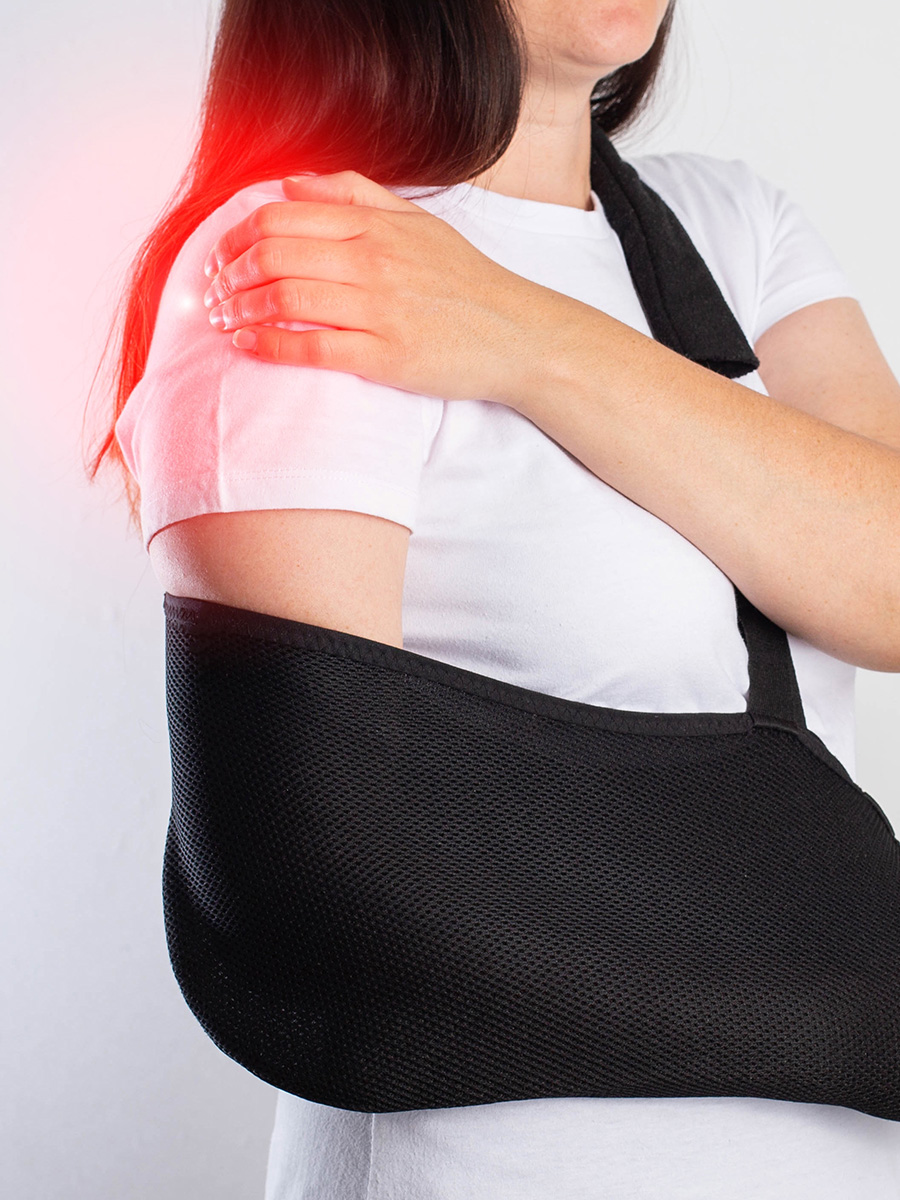
Causes and Risk Factors
- Traumatic events such as falls, sports injuries, or motor vehicle accidents
- Forceful overhead or twisting arm movements
- Contact sports (e.g., football, hockey, wrestling)
- Previous dislocations that weaken joint stability
- Hyperlaxity or connective tissue disorders (e.g., Ehlers-Danlos Syndrome)
- Muscle imbalances or poor scapular mechanics
Symptoms
- Sudden, severe shoulder pain at the time of dislocation
- Visible shoulder deformity (“flattened” deltoid contour)
- Inability to move the shoulder
- Swelling and bruising
- Numbness or tingling (if nerves are affected)
- Sensation of shoulder “slipping out” with movement (chronic instability)
Diagnosis
- Physical exam and assessment of shoulder position and deformity
- X-rays to confirm dislocation direction and rule out fractures
- MRI or MR arthrogram to evaluate for labral tears or soft tissue damage
- Neurological exam to assess for nerve involvement
Treatment
Non-Surgical Treatment (Initial Dislocation)
- Closed reduction: repositioning the shoulder by a trained provider
- Immobilization in a sling for a few weeks
- NSAIDs for pain and inflammation
- Physical therapy to restore strength and prevent recurrence
Surgical Treatment
- Recommended for patients with:
- Repeated dislocations
- Associated labral or bone injuries
- High-demand athletes with instability
- Arthroscopic labral repair (Bankart repair) is common for anterior instability
- Latarjet procedure may be used if there is significant bone loss
- Capsular shift or plication for patients with generalized ligament laxity
Recovery Outlook
Initial dislocations treated non-surgically may require 3–6 weeks of rehab
Surgical recovery involves a sling for 4–6 weeks, with gradual return to full activity over 4 to 6 months
With proper treatment, long-term shoulder function is usually excellent
Early surgical intervention may reduce recurrence risk, especially in young athletes
Why Kerlan Jobe Institute?
At Kerlan Jobe Institute, our fellowship-trained shoulder specialists are leaders in arthroscopic shoulder stabilization and individualized care. Whether managing a first-time dislocation or a complex recurrent case, we provide expert diagnosis, tailored rehabilitation, and advanced surgical techniques to restore full function and long-term joint stability.
Getting You Back in Motion
Surgery is just the beginning. How do you heal, move, and feel when all is said and done?
From NHL and NBA players to weekend warriors, our goal is the same: getting you back to doing what you love.

Patient Testimonials
highly skilled surgeon
“Dr. Kvitne operated on my shoulder 3 years ago and I had a perfect recovery and no problems since and I do not see a scar. He is kind with a great bedside manor and a highly skilled surgeon.”
Dr. Kharrazi truly got me back on my feet—literally.
One year ago, I tore several ligaments in my knee, and now I’m able to do the things I enjoy again.
His expertise, knowledge, and confidence are what made me choose him as my surgeon, and I will always be grateful to him and his entire team. Rudy, his assistant; Norma, who was always so prompt with all of my emails; and Blanca, who helped with forms—each of them made a difference. I can’t thank them enough for being there with me every step of the way.
I can’t say enough good things about Dr. Kvitne
“My experience with Dr Kvitne was amazing he is a outstanding Doctor what a talented man he is my knee was in such bad shape he did not have much to work with but he got in there and fixed me up there was so much that had to be repaired Dr Kvitne with his knowledge and experience repaired my knee so nicely done I have had knee surgery before but never like this I can’t say enough good things about Dr Kvitne awesome human being as well as a awesome excellent Doctor!!”
Dr. Kharrazi gave me my mobility back
After 2 knee surgeries with other Orthopedics I must say that Dr. Kharrazi is a miracle worker. I have my mobility back and my pain level is so greatly improved. Thanks Dr. K!
Schedule a Consultation
Kerlan-Jobe provides comprehensive orthopaedic care for patients seeking expert treatment for sports injuries, joint pain, and mobility limitations. We offers specialized experience and a patient-first approach designed to support lasting results.
Contact the office to schedule a consultation and learn more about your treatment options.