
Radial Tunnel Syndrome
What Is Radial Tunnel Syndrome?
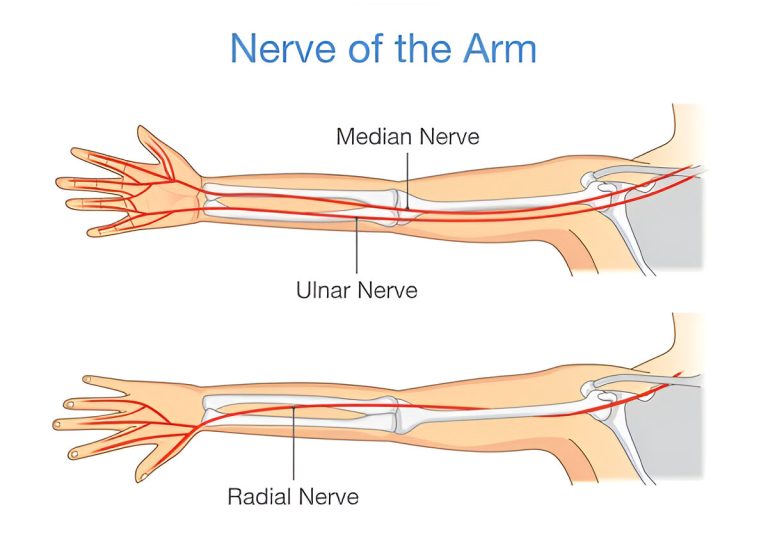
Radial Tunnel Syndrome occurs when the radial nerve is compressed as it passes through a narrow tunnel in the upper forearm, near the elbow joint. This tunnel, known as the radial tunnel, is formed by muscles, tendons, and bone.
Unlike other nerve entrapment syndromes, radial tunnel syndrome is characterized by deep aching pain in the forearm rather than tingling or numbness, making it easily confused with lateral epicondylitis (tennis elbow).
Causes and Risk Factors
Repetitive wrist extension and forearm rotation, especially in activities like throwing, hammering, or prolonged computer use
Direct trauma to the outside of the elbow
Muscle hypertrophy or scarring near the supinator muscle
Occupations involving repetitive motion, such as mechanics or assembly-line workers
Prior elbow injury or surgery
Symptoms
Dull, aching pain over the lateral forearm, about 2–4 cm below the lateral epicondyle
Pain that worsens with forearm rotation, wrist extension, or lifting objects
Tenderness over the radial tunnel
Weakness or fatigue with gripping, despite preserved muscle strength
Unlike other nerve conditions, numbness or tingling is typically absent
Diagnosis
Clinical examination to differentiate from tennis elbow
Palpation to identify point tenderness over the radial tunnel
Provocative tests:
Resisted supination test
Middle finger extension test (Maudsley’s test)
Nerve conduction studies and EMG may help rule out other nerve disorders
MRI or ultrasound used to identify structural compression or muscle enlargement
Treatment
Non-Surgical Treatment
First-line approach for most patients
Involves:
Activity modification
Wrist splinting
NSAIDs
Stretching and strengthening exercises
Ergonomic adjustments in the workplace
Occasionally, corticosteroid injections may provide relief, although their long-term effectiveness is debated
Surgical Treatment
Considered for patients with persistent pain lasting over 6 months despite conservative care
Involves radial tunnel decompression, where fibrous bands compressing the nerve are released
Outpatient procedure with relatively low complication risk
Recovery Outlook
Most patients respond well to conservative treatment within 3 to 6 months
Surgical patients typically return to normal activities in 4 to 8 weeks, with full recovery by 3 to 4 months
Early diagnosis and proper treatment significantly improve outcomes
Why Kerlan Jobe Institute?
The team at Kerlan Jobe Institute provides expert diagnosis and personalized care for radial tunnel syndrome, helping patients differentiate it from similar conditions like tennis elbow and ensuring the most effective treatment is delivered.