
Patellofemoral Pain Syndrome (PFPS)
Runner’s Knee
What Is Patellofemoral Pain Syndrome?
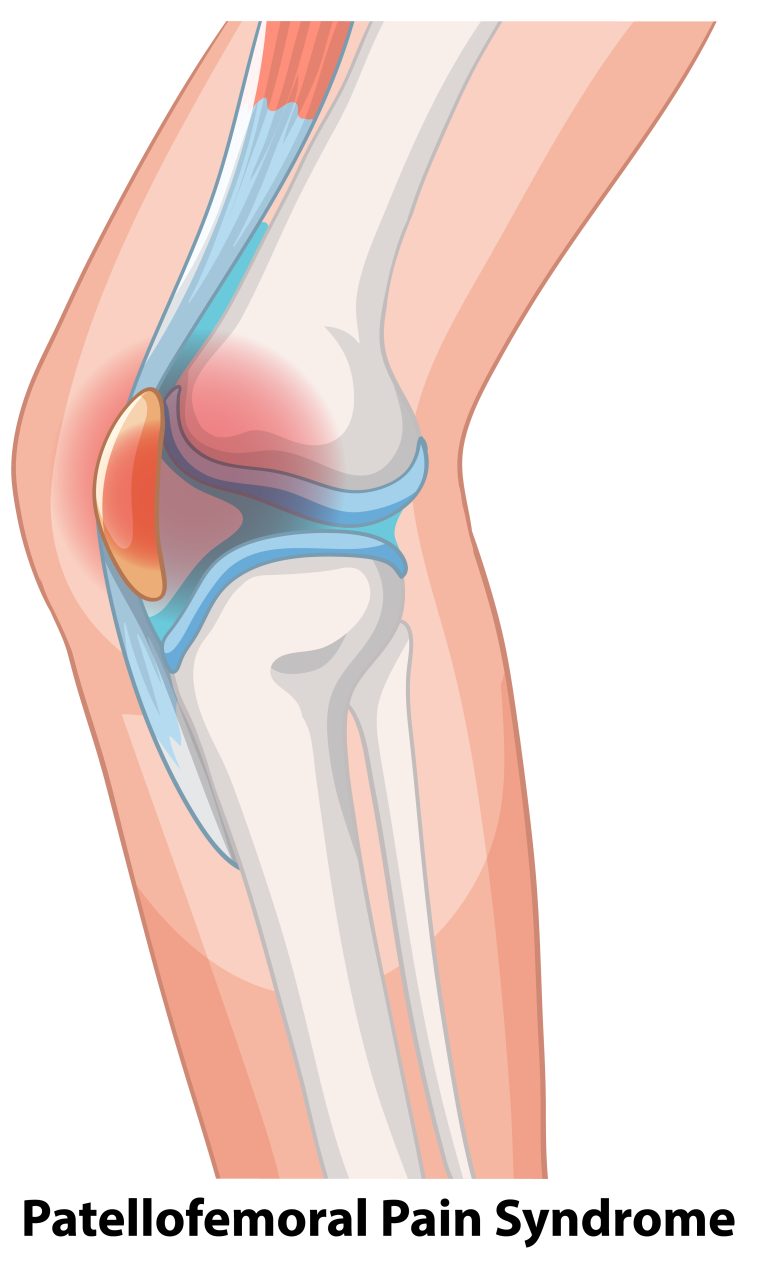
Patellofemoral Pain Syndrome (PFPS) refers to pain at the front of the knee, around or behind the kneecap (patella), often aggravated by movement. Sometimes called “runner’s knee,” PFPS is a common condition in young athletes, active adults, and individuals who perform repetitive knee movements.
This condition typically arises when there is irregular tracking of the patella within the groove of the femur, causing irritation to the surrounding cartilage and soft tissue.
Common Causes of PFPS
PFPS can develop from a combination of anatomical, biomechanical, and activity-related factors:
Overuse from running, squatting, climbing, or prolonged sitting
Muscle imbalances or weakness, especially in the quadriceps and hips
Improper alignment of the lower limb (knock-knees, flat feet, or overpronation)
Previous patellar dislocation or trauma
Tight hamstrings or IT band
Signs and Symptoms
Patients with PFPS often report:
Dull, aching pain at the front of the knee
Pain that worsens with:
Going up or down stairs
Squatting or kneeling
Sitting for long periods (“movie theater sign”)
Popping or grinding sensations under the kneecap
Occasional knee instability or giving way
Diagnosing PFPS
Diagnosis is primarily clinical and includes:
A thorough physical examination to assess:
Patellar tracking
Quadriceps strength and flexibility
Alignment of the hips, knees, and feet
Imaging (X-rays or MRI) may be used to rule out structural problems, cartilage damage, or early arthritis
Treatment Options
Most cases of PFPS can be treated without surgery.
Non-Surgical Treatment
Activity modification to reduce stress on the knee
Physical therapy focused on:
Strengthening the quadriceps and gluteal muscles
Improving patellar tracking
Enhancing flexibility (hamstrings, IT band)
Taping or patellar tracking braces
Foot orthotics for flat feet or abnormal gait mechanics
NSAIDs or topical pain relievers
Surgical Options (for rare, severe, or unresponsive cases)
Lateral release to reduce tightness on the outer knee
Medial patellofemoral ligament (MPFL) reconstruction if instability is present
Realignment procedures to adjust patellar tracking
Return to Activity
Most patients improve significantly with proper rehab and can return to:
Recreational sports within 4–8 weeks
Competitive athletics in 2–3 months
Long-term prevention with continued strength and flexibility maintenance
Expert Care at Kerlan Jobe Institute
The orthopedic specialists at Kerlan Jobe Institute take a comprehensive approach to diagnosing and treating patellofemoral conditions. We focus on conservative care first, and tailor each recovery plan to the patient’s sport, lifestyle, and long-term goals.