Ulnar Collateral Ligament (UCL) Tear
What Is the UCL?
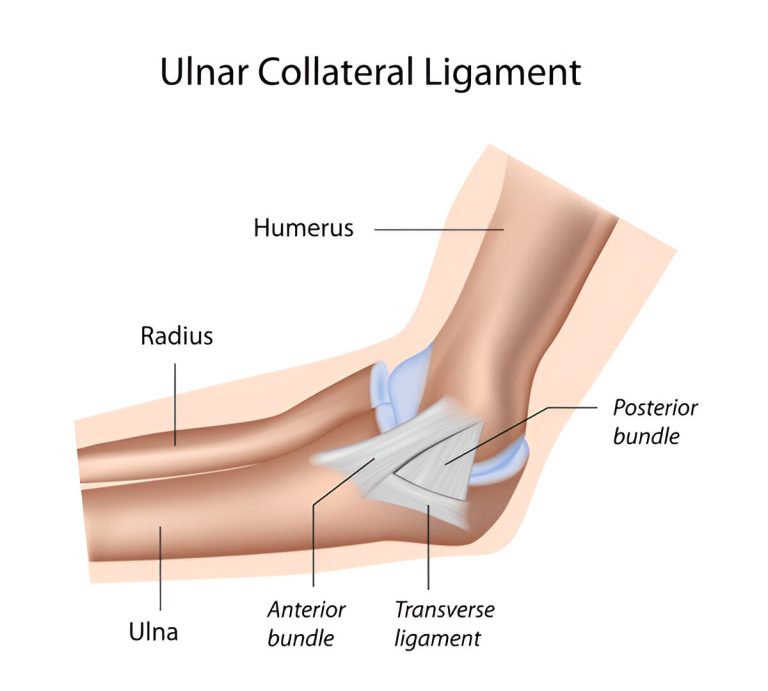
The ulnar collateral ligament (UCL) is a key stabilizing ligament on the inner (medial) side of the elbow. It connects the humerus (upper arm bone) to the ulna (inner forearm bone) and helps resist valgus stress — a force that pushes the forearm away from the body. This ligament is especially vital in overhead throwing sports like baseball, javelin, and softball, where high stress is repeatedly placed on the inner elbow.
What Is a UCL Tear?
A UCL tear occurs when the ligament is stretched or torn due to repetitive stress or a traumatic injury. In athletes, this is typically caused by the repetitive acceleration and deceleration phases of throwing, which strain the ligament over time. UCL tears range from minor sprains to complete ruptures, and may occur suddenly (acute) or gradually (chronic).
Causes and Risk Factors
Repetitive overhead throwing (pitching, javelin)
Poor throwing mechanics
Inadequate warm-up or muscle imbalance
Sudden increase in throwing workload or velocity
Previous elbow injuries
Symptoms of a UCL Tear
Pain on the inner side of the elbow, especially during or after throwing
A popping sensation at the moment of injury (in acute tears)
Loss of velocity or accuracy in throws
Swelling and tenderness along the inner elbow
Elbow instability or looseness during motion
Inability to continue throwing
Treatment Options
Non-Surgical (Conservative) Treatment
Recommended for partial tears or non-athletes:
Rest and activity modification
Ice and anti-inflammatory medication
Physical therapy focusing on forearm, shoulder, and core strength
Biomechanical correction (throwing technique)
PRP (platelet-rich plasma) injections in some cases
Surgical Treatment – Tommy John Surgery
For complete tears or high-level athletes:
UCL reconstruction using a tendon graft (often from the forearm or hamstring)
Performed with small incisions and sometimes assisted by internal bracing
Rehabilitation begins shortly after surgery
Recovery Timeline
Non-surgical rehab: 3–6 months depending on severity
Tommy John surgery:
Return to throwing: 4–6 months
Return to full competition: 9–12 months, sometimes longer
Return to Sport
The majority of athletes who undergo UCL reconstruction can return to their previous level of play — often with improved performance — when rehabilitation protocols are followed precisely.
UCL Expertise at Kerlan Jobe Institute
The specialists at Kerlan Jobe Institute are pioneers in the diagnosis, treatment, and surgical reconstruction of UCL injuries. Whether you’re an elite pitcher or a weekend athlete, our team delivers customized treatment plans that prioritize both recovery and long-term elbow health.